

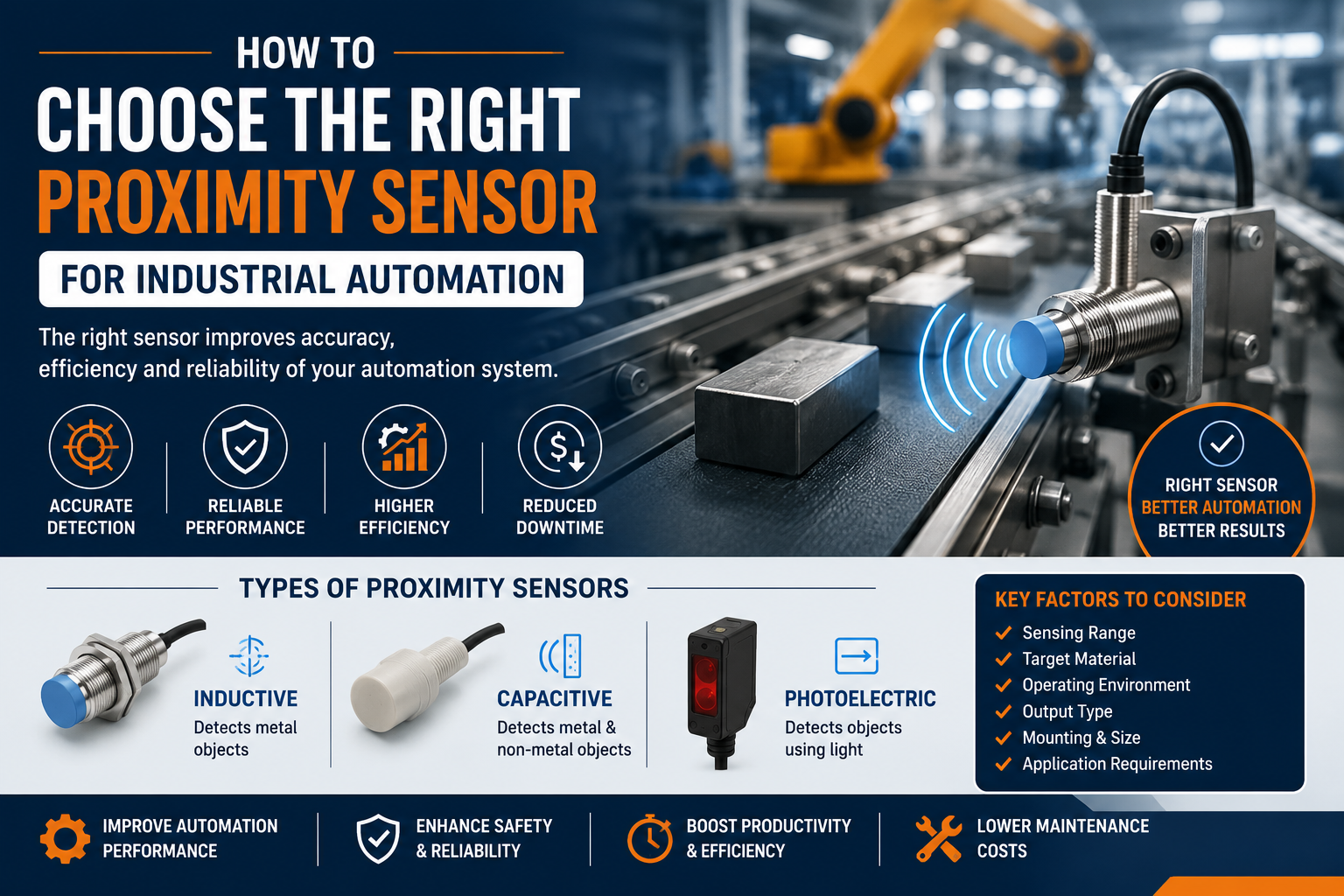
Are you looking for the best industrial automation sensors for your industry? You have installed every advanced sensor in your Industry, but what about a proximity sensor? These sensors help detect objects accurately without physical contact; this helps machines operate safely, accurately, and efficiently. Whether you operate conveyor belts, control robotic equipment, or choose the right proximity sensor, reliable operations while reducing downtime and maintenance costs.
In this article, we will talk about the different types of proximity sensors and deeply explain what to consider before making a choice for your industry. Stay tuned with us:
What Are Proximity Sensors?
A proximity sensor is an apparatus that can identify the presence or absence of an object in a specific area without making any form of contact with it. Proximity sensors work using magnetic fields, light, sound or capacitive sensing – these aspects make them differ from traditional devices, which depend on physical contact with objects.
Proximity sensors are widely used in industrial automation for the following processes:
- Object identification on conveyor belts
- Position detection within equipment
- Counting and sorting of items
- Safety interlock products
- Liquid level detection in containers and vessels
The fact that proximity sensors are reliable, robust, and accurate devices makes them indispensable elements of modern automation systems.
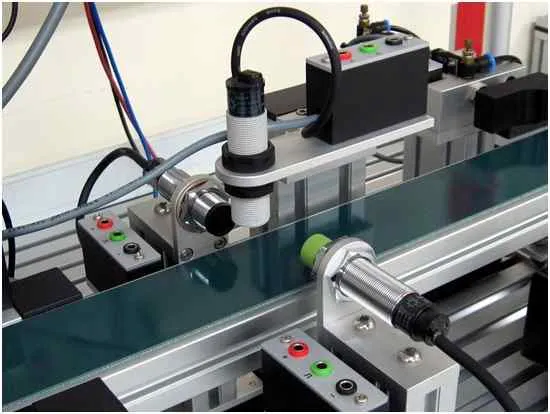
Why Does Choosing The Right Sensor Matter?
Selecting the wrong proximity sensor can lead to various issues in your industry, including:
- Wrong detection and missed signals
- Lower system efficiency
- Increased maintenance and replacement costs
- Slow production & safety risk
On the other hand, when you select the right proximity sensor from a reputed supplier like Unseen Era:
- They provide accurate and consistent detection
- Enhance production quality with automation efficiency
- Longer equipment lifespan
- Reduce operational costs
- Enhance workplace safety
Unseen Era smart industrial automation & safety sensors help to eliminate guesswork by analysing requirements and provide you with the most suitable sensor technology for optimal performance.
What Are The Types Of Proximity Sensors?
Having the correct knowledge of the types of proximity sensors is key when it comes to making the right choice in the field of industrial automation. Inductive sensors can work in various ways, ensuring their proper functioning depending on the specifics of the detected materials, detection distance, and environmental conditions. Therefore, the proper choice and usage of these sensors can help enhance improvement of production efficiency, as well as lower maintenance costs and downtime.
Though the sensors are suitable for metal, liquid, and transparent objects, proximity sensors can work in various industries because they are capable of detecting non-contact objects. By thoroughly analysing their requirements for various applications, companies can achieve high productivity and reliable operation of their automated systems.
- Inductive Sensors: This sensor easily detects metals
- Capacitive Sensors: Very versatile in use; detect solids, liquids, and powders
- Photoelectric Sensors: Use light beams for detection
- Ultrasonic Sensors: Use sound waves to detect things
- Magnetic Sensors: Detect magnetic fields
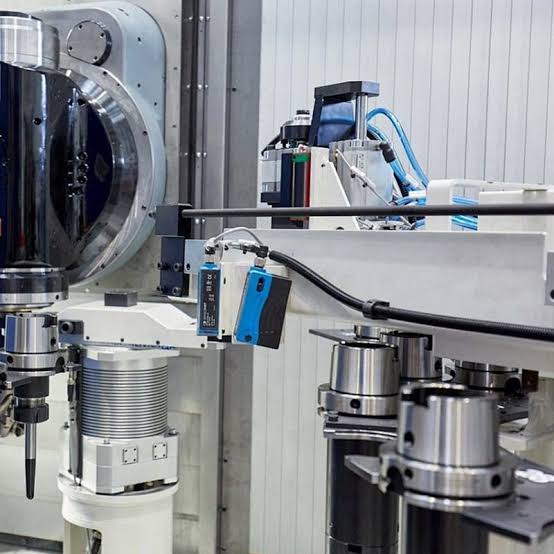
What Are The Key Factors To Consider When Choosing The Right Proximity Sensor?
Selecting the appropriate proximity sensor is not merely an exercise in making a choice among devices; it is all about selecting the device with the right technology that meets your application requirements. You must consider several aspects of how to get suitable materials for monitoring, as each criterion has a direct effect on the performance as well as the level of accuracy. When the proximity sensor is chosen correctly, it may allow you to automate processes successfully, decrease your rate of errors, and enhance efficiency.
In any industrial setting where precision and durability are important, it is of great importance to pay attention to technical aspects such as response time, output type, and IP rating. At Unseen Era, we can assist industries by considering real-life conditions, ensuring effective long-term service without problems. The following are the factors that you should keep in mind:
What Are the Common Mistakes You Should Avoid to Choose proximity sensors for Industrial Automation?
When you want to choose the best proximity sensor for your industry type, you need to avoid these common mistakes:
- Choose a sensor based on its low price instead of performance
- Ignoring sensor environmental conditions
- Choosing the incorrect sensing range
- Not checking the sensor’s detecting capabilities and the control system
- Overlooking maintenance and durability factors
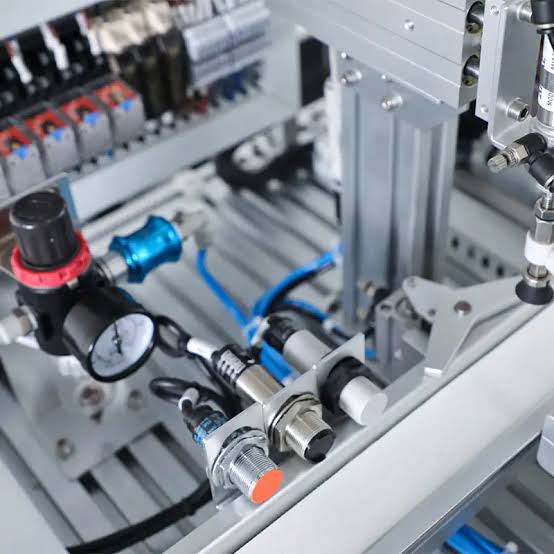
What Are The Applications Of Proximity Sensors For Industrial Automation?
Proximity sensors are used across various industries, including:
- Manufacturing industries and assembly lines
- Packaging and material handling
- Automotive industry
- Food and beverage processing
- Pharmaceutical production
- Conveyor automation systems
These sensors provide accurate, contactless detection that makes them best suited for every industrial usage.
Why Choose Unseen Era For Proximity Sensor Solutions?
Choosing the right proximity sensor can make a difference for your industry. Unseen Era stands out as the most trusted smart industrial automation supplier that provides advanced industrial automation solutions tailored to your specific needs. Their expert engineers understand every unique step; that’s why most industries achieve precision, performance, and long-term reliability.
Here are the industrial solutions Unseen Era provides:
People Also Ask About How to Choose the Right Proximity Sensor for Industrial Automation
Q.1 What types of proximity sensors are used in metal industries?
A: Most metal industries use inductive proximity sensors that are reliable for detecting metal objects without physical contact. Magnetic sensors are used for position detection, and photoelectric sensors are used for object detection in automated production lines.
Q.2 What factors should I consider before buying a proximity sensor for my manufacturing industry?
A: When you want to buy a proximity sensor for your manufacturing industry, you need to consider various factors such as target material, sensing distance, sensor type, operating environment, IP protection rating, output type (NPN/PNP), voltage compatibility, mounting space, response speed, and durability requirements.
Q.3 Does Unseen Era help me to choose the best proximity sensors?
A: Yes, at Unseen Era, our specialised engineers help you to choose the best proximity sensor based on your industrial applications, sensing requirements, operating environments and automation needs.
Q.4 What types of proximity sensors are used for metal detection?
A: The inductive proximity sensor is used in most metal industries because it can detect ferrous and non-ferrous metal objects without making any physical contact.
Q.5 Which type of proximity sensor is used in the chemical industry?
A: In the chemical industry, capacitive, ultrasonic, and corrosion-resistant inductive proximity sensors are mostly used for handling harsh industrial environments because these sensors easily detect different materials and withstand chemical exposure.
Q.6 What is the average lifespan of proximity sensors?
A: The average lifespan of proximity sensors is up to 5 to 10 years, and it totally depends on the sensor type, operating environment, quick installation and maintenance conditions.






 Call
Call Whatsapp
 Contact Us